Here are some photos of our neighbourhood forest building project:
Showing posts with label studio project. Show all posts
Wednesday, April 22, 2020
Happy Earth Day!
Today is the 50th anniversary of Earth Day. Being stuck inside, we were missing our local forest. So we built it using recycled cardboard and paper mache.
Here are some photos of our neighbourhood forest building project:
Tuesday, November 26, 2019
Magic Tree
I've suggested this idea before, and I'm sure I will use it again, but a great studio project can start with the prompt: something that you pass everyday. This is also a good way to train the eye to see magic and beauty in the world. For me, I find it in the parks and trails of Toronto.
Here is a recent example:
Friday, November 8, 2019
Inktober Highlights
During the month of October, many artists attempt a global art challenge: Inktober- to do one ink drawing every day for the whole month. This is a great art studio project.
A few years ago, I complete the challenge and I did it again this year. Although many of the ink drawings are quick and rushed, the point is to have fun, get into good drawing habits and find new ways of working with ink. Here are a few of the highlights from this year:
- Patrick
Thursday, October 31, 2019
Happy Halloween! Symmetrical Pumpkin Project
It's been a busy fall! I just finished Inktober (doing one ink drawing a day for the month of October). I highly recommend this challenge - and it may be a fun class project for higher grades. For the younger grades, my class had a great time doing these Symmetrical Pumpkins.
We've just started 2D Geometry in Math, so this project is great way to practice symmetry and to celebrate Halloween with a fun craft project. This is also a great way to introduce the concept of negative space.
Step 1: Draw half a pumpkin on a half sheet of orange construction paper.
Step 2: Cut out the pumpkin and then the eye and the mouth. *Keep all the pieces of orange paper*
Step 3: Flip and glue the orange pieces onto the full piece of black construction paper.
Patrick
Wednesday, May 8, 2019
French Elements and Principles of Design Handouts and Worksheets
Les Éléments et Principes de Design!
I have uploaded French Elements and Principles of Design Handouts and Worksheets to my Teachers Pay Teachers site:
https://www.teacherspayteachers.com/Product/Les-Elements-et-Principes-de-Design-4559755
These are great to use with any age group.
Patrick
I have uploaded French Elements and Principles of Design Handouts and Worksheets to my Teachers Pay Teachers site:
https://www.teacherspayteachers.com/Product/Les-Elements-et-Principes-de-Design-4559755
These are great to use with any age group.
Patrick
Friday, March 15, 2019
Coco Oil Pastel scratch-board project
Recently my class had a great time making their own scratch-board using oil pastels. We used the "Land of the Dead" from the movie Coco as inspiration for a colourful, geometric, fantasy landscape.
Step 1: use warm coloured crayons to colour a white sheet of paper
Step 2: cover the crayon completely with black oil pastel
Step 3: use a toothpick to draw (scratch away) a geometric landscape to reveal the colour beneath
This is great way to use a new technique with different materials and practice using the principle of design: contrast and the elements of design: colour, shape and form.
Here are some examples of student work:
Patrick
Step 1: use warm coloured crayons to colour a white sheet of paper
Step 2: cover the crayon completely with black oil pastel
Step 3: use a toothpick to draw (scratch away) a geometric landscape to reveal the colour beneath
This is great way to use a new technique with different materials and practice using the principle of design: contrast and the elements of design: colour, shape and form.
Here are some examples of student work:
Patrick
Wednesday, December 19, 2018
Something that you pass everyday Studio Project
This year I started doing Something that you pass everyday Studio Project. This encourages students to become more aware of inspiration that they might find all around them. The goal of the project is to find something that they pass everyday that they can use as inspiration for a drawing.
Once the drawing is complete, they colour it traditionally (with watercolour paint, pastels, pencil crayons or markers- depending on the available supplies), or digitally (Photoshop or another image program- depending on available resources).
Here is an example the I recently completed of a window that I pass by everyday. Most days, I walk by it without noticing it, but one day, it caught my eye and I saw how beautiful it was and took a quick picture for future reference. I did a drawing from the photo and the coloured it in Photoshop.
Once the drawing is complete, they colour it traditionally (with watercolour paint, pastels, pencil crayons or markers- depending on the available supplies), or digitally (Photoshop or another image program- depending on available resources).
Here is an example the I recently completed of a window that I pass by everyday. Most days, I walk by it without noticing it, but one day, it caught my eye and I saw how beautiful it was and took a quick picture for future reference. I did a drawing from the photo and the coloured it in Photoshop.
Saturday, November 10, 2018
The Principle of Design: Pattern
As I work through the elements and principles of design with my students, I try to find engaging and achievable projects to highlight the potential of each. The School of Islamic Geometric Design is a great site for patterns and got some fantastic ideas for a memorable pattern design studio project here: http://www.sigd.org/resources/pattern/
There are so many beautiful patterns all around the Aga Khan Museum. It would be great to include a field trip to the museum to explore pattern and find inspiration.
I first visited the museum a few years ago, see some photos in a previous post: here.
Patrick
There are so many beautiful patterns all around the Aga Khan Museum. It would be great to include a field trip to the museum to explore pattern and find inspiration.
I first visited the museum a few years ago, see some photos in a previous post: here.
Patrick
Thursday, August 9, 2018
Giant Blue Spruce - large scale studio project
A studio project that have found challenging and fun is a large scale drawing. I recently completed a large scale pencil drawing of a blue spruce tree. I scanned the drawing and coloured it in Photoshop.
A project like this creates a great opportunity for students to take risks, since it will be a long-term commitment and the results may not be what they initially wanted. This can be a memorable learning experience as it gives students who haven't tried something like this a seemingly insurmountable task to attempt and try to work through. Definitely a challenge and a memorable experience!
Patrick
Wednesday, February 28, 2018
Teachers Pay Teachers
There are some great resources on the site Teachers Pay Teachers, for basically any content, level and detail you want to teach. It's great for ideas, activities and plans to get you started and to make your own for any class.
Recently I've been using some of the resource and I've added my Elements and Principles of Design worksheets, as well as a full Elements and Principles of Design Unit Plan, complete with lesson plans, suggested art studio activities and art history examples.
Cheers!
Patrick
Cheers!
Patrick
Sunday, September 17, 2017
Japanese woodblock database- a digital archive
Thanks to Open Culture for posting about this fantastic collection of Japanese woodblock prints.
This could be a whole unit in any art class, with a studio print-making component and a great art history component with cultural and social investigations as well as visual analysis.
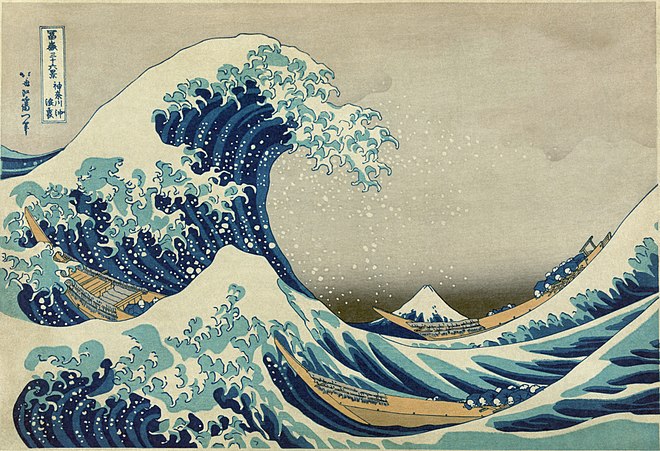
I like to use the work of Hokusai to discuss the awesome use of scale. His 36 Views of Mount Fuji is a fascinating collection and features the famous Under the Wave off Kanagawa - another demonstration of how scale can be used to communicate a message visually.
- Patrick
This could be a whole unit in any art class, with a studio print-making component and a great art history component with cultural and social investigations as well as visual analysis.
I like to use the work of Hokusai to discuss the awesome use of scale. His 36 Views of Mount Fuji is a fascinating collection and features the famous Under the Wave off Kanagawa - another demonstration of how scale can be used to communicate a message visually.
- Patrick
Monday, September 11, 2017
Pirate Printing
This is a pretty inspiring video from Mental Floss, with some fun pirate print-making in the city streets. This would be a fun neighbourhood project that could work well along side other local initiatives.
- Patrick
Saturday, November 14, 2015
Instructables
Here's a fun website with how-to videos for all kinds of projects. Many ideas for lesson/ independent projects/ studio projects here: http://www.instructables.com
- Patrick
- Patrick
Saturday, August 29, 2015
A fun intro to photography project
1. Introduce some tips for taking good photographs
This video worked well with my class.
2. As a group, try to identify each of the tips in the work of a few professional photographers.
3. Individually choose a theme or place to take 9 photographs- each one demonstrating the application of one of the tips.
4. Individually, each student saves their best 9 photographs to a folder for submission and evaluation.
5. Group critique (2 or 3 students examples per tip).
Here are some examples of Steve McCurry's wonderful work (as well as the one above):
Friday, August 28, 2015
Back To The Future Project
I've always loved the first Back To The Future and this past spring I used it in my grade 10 Media Arts class for a few arts assignments.
The purpose of first Back To The Future assignment was to help students develop their ability to analyze works of media arts- starting with a format they are comfortable with- film.
Using the critical analysis process, the students watched Back To The Future and made notes and observations about some some of the dominant themes of the film. Such as: time, scientific invention, 50's culture, 80's culture, music and friendship.
The they made connections between the themes they identified and the way the film-makers presented their story- what was included in the shot? what music was used and when? how were the two different time periods portrayed? How is friendship represented?
One interesting observations that one student made was- the director included 88 clocks in shots throughout the film. Coincidence? - Probably, but interesting to note. What we can say for sure is that the film-makers went out of their way to include clocks, watches and time displays in every important scene in the film, constantly reminding the viewer that time is ticking.
The purpose of the second Back To The Future assignment was to have the students choose an idea from the film to create a product to commemorate the film- a kind of memorabilia for the 30th anniversary of the film.
Here is one example:
- Patrick
Sunday, January 4, 2015
Graphic Design Unit: Movie Poster Project
Happy New Year!
To start the year off, here's a fun and easy art project. This would work for a unit on graphic design.
Step 1: introduce the 4 fundamentals of graphic design. (see handout below)
Step 2: allow students to build an understanding of the 4 fundamentals by working through a few exercises
Step 3: review what worked and what didn't work in the exercises
Step 4: introduce the poster design project
Poster Design Project:
Part 1: use this article from the Globe and Mail to see some of the most successful movie posters from 2014
Part 2: write a summary of how your favourite poster uses the 4 fundamentals
Part 3: create a poster for your favourite movie using all 4 fundamentals
To start the year off, here's a fun and easy art project. This would work for a unit on graphic design.
Step 1: introduce the 4 fundamentals of graphic design. (see handout below)
Step 2: allow students to build an understanding of the 4 fundamentals by working through a few exercises
Step 3: review what worked and what didn't work in the exercises
Step 4: introduce the poster design project
Poster Design Project:
Part 1: use this article from the Globe and Mail to see some of the most successful movie posters from 2014
Part 2: write a summary of how your favourite poster uses the 4 fundamentals
Part 3: create a poster for your favourite movie using all 4 fundamentals
-Patrick
Thursday, December 25, 2014
Studio Project: From a freehand sketch to a finished work in three stages
Merry Christmas & happy holidays!
I finished this one a few days ago and had a lot of fun making it- it's called "New King" and is based on some photos I took of a great tree just off of Steeles Ave. in Toronto.
Stage 1: Freehand sketch
Students brainstorm an idea for a sketch and collect reference images as research. Next, students work out a rough sketch, considering composition and any elements and principles of design to use in the project.
Stage 2: Refined Sketch
Students work up their freehand sketch and then draw over it with ink. Transferring the image or using a lightbox might be required.
Stage 3: Finished work
Students colour and complete the final work from the refined sketch. Suggested media, any one of the following: Photoshop, Illustrator, Watercolour, pencil crayons, markers, pastels.
I finished this one a few days ago and had a lot of fun making it- it's called "New King" and is based on some photos I took of a great tree just off of Steeles Ave. in Toronto.
Stage 1: Freehand sketch
Students brainstorm an idea for a sketch and collect reference images as research. Next, students work out a rough sketch, considering composition and any elements and principles of design to use in the project.
Composition: off-centred; focus on the crown of the tree
Elements of Design used: line, shape, form, texture
Principles of Design used: contrast, variety, emphasis
Stage 2: Refined Sketch
Students work up their freehand sketch and then draw over it with ink. Transferring the image or using a lightbox might be required.
Stage 3: Finished work
Students colour and complete the final work from the refined sketch. Suggested media, any one of the following: Photoshop, Illustrator, Watercolour, pencil crayons, markers, pastels.
Thursday, August 7, 2014
Cool Light, Warm Shadows Landscape Painting
Here's a recent pen and ink sketch that I enjoyed putting together- scanned, and then coloured in photoshop. This made me think of an art history/ studio project that would be fun to try out in class.
Part One: students analyze oil sketches and paintings of winter landscapes by Tom Thomson and Lawren Harris with attention to the colour they used for light and shadows.
Part Two: students complete a Creative Process booklet to develop their own sketch and painting about light and shadows.
Part Three: final painting and group critique.
Here are a few of Tom Thomson's:
- Patrick
Saturday, December 21, 2013
Illustration Unit: Willy Pogany
I started this blog for in-class art projects and lesson plans. Lately it's been all about field trips - and I've covered a few art gallery shows in between. I want to get back to posting about in-class activities and good starting points for projects.
The golden age of illustration would make a great theme for a studio project and a long-term art history section. This high-point of traditional commercial art featured work by english artists including: Aubrey Beardsley and Arthur Rackham and american artists including: Howard Pyle, N.C. Wyeth and Maxfield Parrish.
This post presents a personal favourite Willy Pogany, originally from Hungary, who started his career in England and then moved to the US.
Willy Pogany illustrated many wonderful narrative books covering myths and legends, fairy tales and adventure stories. He works with pen and ink on smooth paper using short expressive line-work and an art nouveau design approach. His work features beautiful examples of hand-lettering.
A fun studio project: students choose a myth or legend from any culture to research and illustrate one scene from the story. A title or quote must be included in the design using hand-lettering. Students can also choose from folk stories, fairy tales and adventure books.
Students will complete a Creative Process Booklet to be submitted with the final work that will present the brainstorming, research, experimentation, rough work and reflection.
Lesson One: Intro to the Golden Age of Illustration
Lesson Two: pen and ink basics
Lesson Three: pen and ink techniques
Lesson Four: hand-lettering techniques
Lesson Five: The work of Willy Pogany
Lesson Six-Ten: Studio project: The Creative Process
Lesson Eleven: Final Submission - Class Presentation and Group Critique
Subscribe to:
Posts (Atom)