Monday, September 22, 2014

The best book ever for learning about Pen & Ink

I do not usually recommend specific books or products, however, this is one must-have item for anyone interested in learning about pen & ink. The book is: "Rendering in Pen and Ink" by Arthur L. Guptill, edited by Susan E. Meyer.

I was given this book as a gift when I was a teenager and was inspired to start drawing immediately. I still use it all the time to get inspiration or to try a new technique.


It's great for beginners and for experienced artists. It features exercises, and explains techniques as well as providing some of the best work in pen and ink from a variety of fields. Here are a few examples:


This book will provide more than enough material for a strong and engaging unit on pen and ink drawing and rendering. 


I hope you and/or your students get the chance to find inspiration from its pages!

- Patrick

Thursday, August 7, 2014

Cool Light, Warm Shadows Landscape Painting


Here's a recent pen and ink sketch that I enjoyed putting together- scanned, and then coloured in photoshop. This made me think of an art history/ studio project that would be fun to try out in class.


Project: cool light, warm shadows landscape painting

Part One: students analyze oil sketches and paintings of winter landscapes by Tom Thomson and Lawren Harris with attention to the colour they used for light and shadows.

Part Two: students complete a Creative Process booklet to develop their own sketch and painting about light and shadows.

Part Three: final painting and group critique.


Here are a few of Tom Thomson's:


- Patrick


Tuesday, July 1, 2014

Happy Canada Day!

In spirit of our national day of celebration, here are a few quick and easy photography projects.

#1. Create a series of 5 photos with the colours red and white as the focus.
#2. Take a photo that would make a good poster to celebrate a Canada Day celebration.
(either of these would work for other countries' festivities as well)


Here are two shots I took just walking down the street the past few days. It goes to show how you see what's already on your mind.

- Patrick

Saturday, June 7, 2014

The Mural Project


This mural was completed by students from grades 9-12, each contributing a small part and working together over the course of two weeks.

The process for the project is described here:
http://splitcomplementary.blogspot.ca/2014/04/mandala-mural-project.html

I really enjoyed this project because it's flexible and adaptable - it's easy to let students take the theme in various directions. It was a fun, collaborative project and everyone enjoyed making it.


- Patrick

Thursday, May 1, 2014

Guest Speaker Scott Mills on Social Media for Success and Safety

(Laurie Stinson, Angel Freedman, Scott Mills, and me)

Today at Blyth Academy Thornhill we had an inspiring guest speaker, Constable Scott Mills discuss how to use social media for success and safety. Scott engaged the students with fun, fascinating and thoughtful stories from his experience working with the Toronto Police and Crime Stoppers and explained effective and smart ways to use various social media.

He did a live video to youtube during his presentation that you can see here along with some helpful community links: http://internetviolenceprevention.com/2014/05/community-connections-at-blyth-academy-thornhill-for-success-safety-blytheducation/

- Patrick

(Me with the wonderful social worker Angel Freedman, who set up the presentation)

Monday, April 7, 2014

Mandala Mural Project


In a few weeks I will be co-ordinating a group mural project in the school with the grade 9 and 10s. The mural will cover a 10 ft X 10 ft wall in one of the common areas. The theme of the mural is "school spirit" and it will take the form of a mandala.

I like the mandala theme because it solves the overall design problem and leaves a lot of room for changes along the way and input from students and teachers. It also solves the problem of varying levels of skill among the students since they will be applying their contribution to the mural by using stencils that can be carefully drawn and cut before any painting happens.

The biggest concern for mural projects in general is how to avoid any free-hand painting on the wall to make sure there is no build-up of thick paint, no mistakes and no high-pressure situations.


The Basic Steps:

Step #1: BRAINSTORM images that represent school spirit to each student
Step #2: RESEARCH the chosen image
Step #3: SKETCH the image on bristol board
Step #4: CUT a stencil of the sketch (repeat as necessary)
Step #5: the teacher will work with the group to create a mandala pattern using the students' stencils
Step #6: PROJECT a geometric guide on the wall for each layer of the stencil using masking tape or a pencil as a guide (each student will paint their stencil on one layer of the mandala)
Step #7: One by one, the students tape their stencil and paint it over and over around their layer until the layer is full of their image
Step 8: use a paint marker to add detail
Step 9: remove any tape guides and enjoy!


Supplies:
Pencils, erasers, masking tape, bristol board (for stencils and tape guides on the wall)
House paint: 1 off-white for the background and 2 tones for the mural
Brushes/ paint tray
Drop sheet
Acrylic paint markers for details and writing on the wall


* As a side project, have someone film/photograph the mural as the students create it for a fun video of the process. See my tree mural project for an example.

** For some mandala inspiration see this great post on boooooom.

Tuesday, March 11, 2014

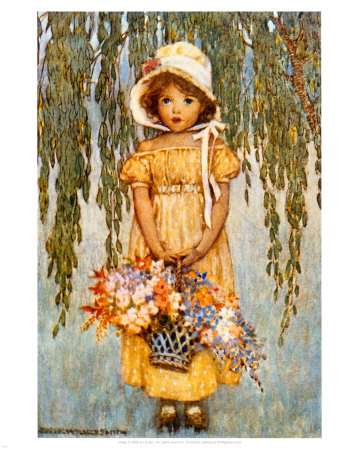
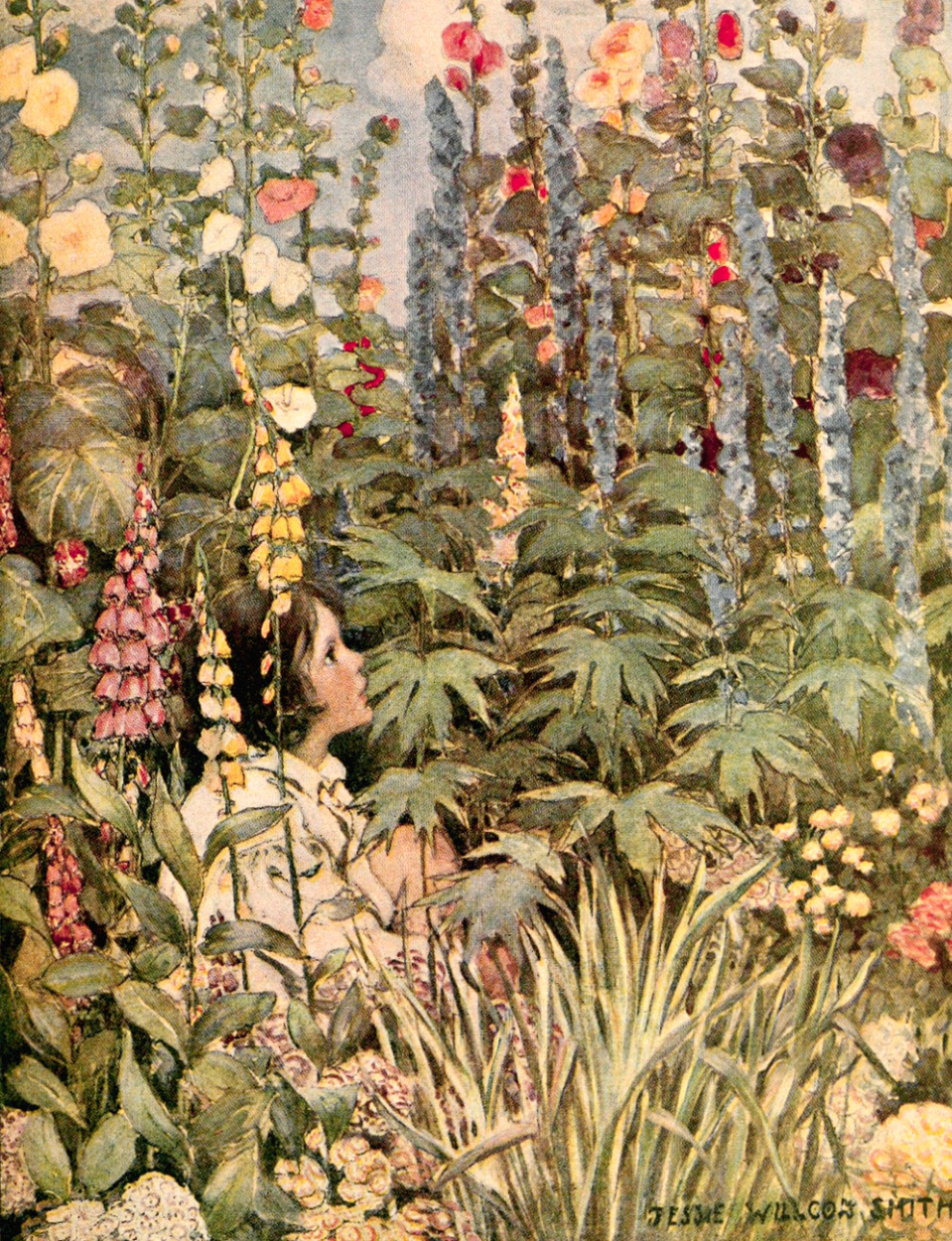
The Golden Age of Illustration: Jessie Wilcox Smith


Art history focuses too often on male artists. I made the same mistake with an earlier series of posts featuring artists from the Golden Age of Illustration. One of the leading female artists from that time is Jessie Wilcox Smith. Here is some of her her work.


She studied art at university, taking classes taught by Howard Pyle, who seems to have had a magical influence on many of his students who went on to become some of the greatest illustrators of all time.


Her work focuses on girlhood adventures and references to mother and daughter relationships. She was a master of various media including pastels, watercolour and oils, and frequently combined the material in new ways to achieve a specific effect.


 - Patrick